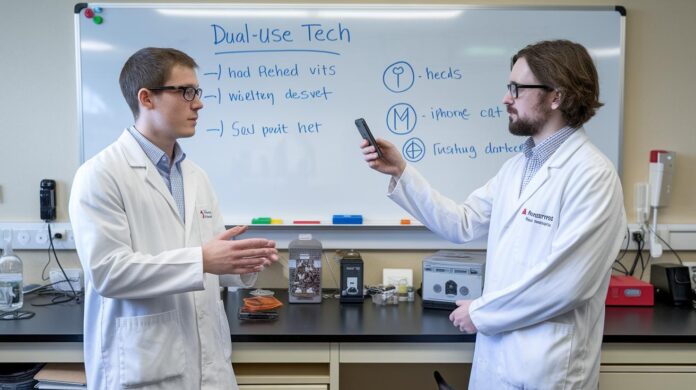

Ever wonder if your everyday gadgets could be doing more than just helping you chat or browse the web? Dual use technology means that the tools you use every day might also be working to protect important information. Imagine your smartphone keeping your personal chats safe while quietly guarding critical national data.
It’s pretty amazing to think that one innovation can serve both your daily needs and add an extra layer of defense for our country. In real-life examples, simple devices play a hidden yet vital role in our security. Stay with us as we explore how this versatile technology makes a surprising impact on our world.
Understanding Dual Use Technology: Definitions and Scope
Dual use technology refers to items and systems that help with everyday tasks and also support defense needs. This idea follows standards like the Wassenaar Arrangement, which is an agreement among 42 countries, and it ties into U.S. rules on things like pathogen research that cover public health, farming, and the environment. For example, encryption software not only keeps your private emails safe but also protects top-secret information for national security. Think of it as your digital helper working in two worlds, keeping both your family chats and defense secrets secure.
This technology covers many innovations used in both military and everyday life. It includes advanced semiconductors that power your common electronics and also run complex defense systems, plus artificial intelligence that assists in medical checks and supports military operations. Take 3D printing as another clear example: one moment it’s speeding up production of everyday items, and the next, it helps produce precise parts for critical defense gear. Imagine a tool that makes a part for your gadget while also crafting a key component for secure military equipment.
By blending everyday technology with defense applications, we see how science supports both our daily lives and national safety. These innovations fuel economic growth and make our lives easier while meeting urgent security needs.
Historical Evolution of Dual Use Technology: Early Innovations to Present
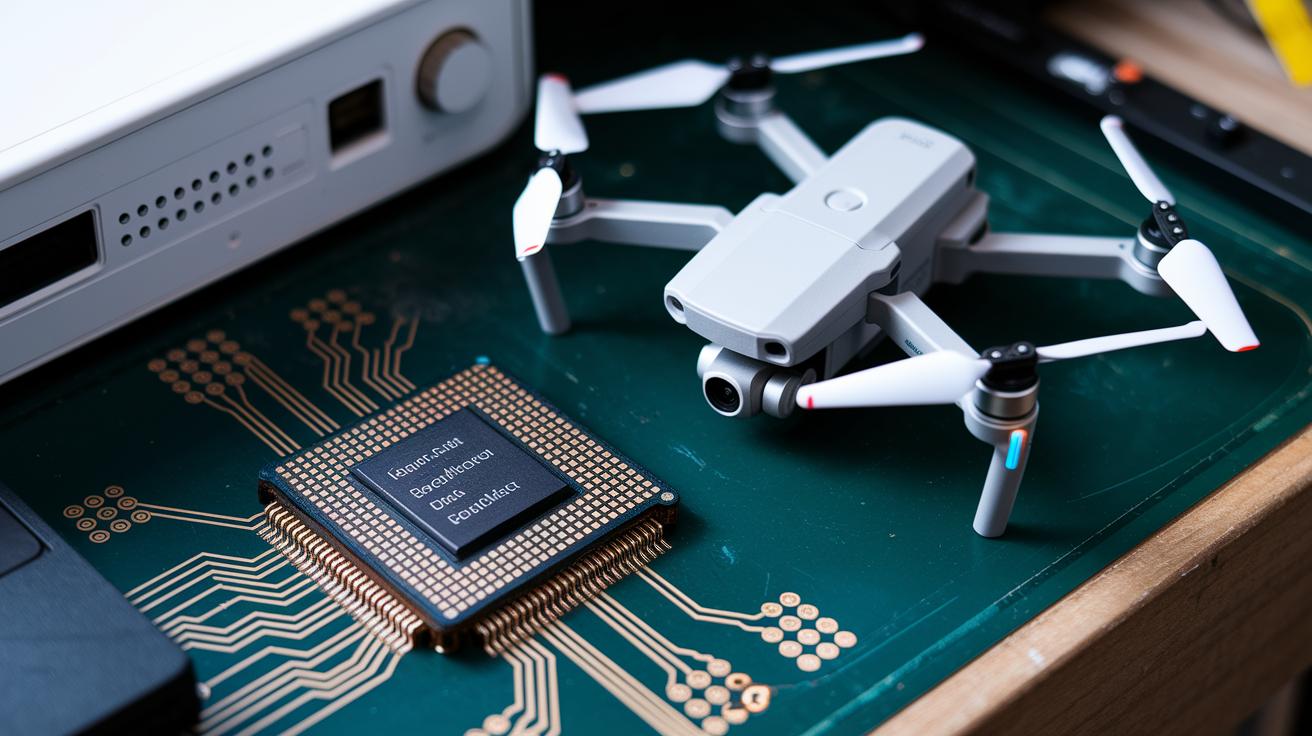
Solid state devices and computer chips were some of the first breakthroughs linking everyday life with national defense. These tiny components powered common gadgets like radios and TVs while also running sophisticated military systems. Imagine one little chip making your appliance work at home while quietly supporting secure military tech, it’s an early example of technology wearing two hats.
By the late 20th century, tech began merging in some pretty cool ways. With the creation of smaller, mightier chips, the same innovations powered both our personal computers and high-stakes defense operations. Think about it: a breakthrough chip design today might run your smartphone and keep an unmanned aerial vehicle in check. It’s a neat reminder of how one idea can serve two very different worlds.
Then came advanced AI, and with it, a whole new level of dual-use potential. Early drones guided by basic AI marked a huge turning point. What started as small AI models tested for defense soon showed they could handle broader tasks, even in areas with higher risks. This ongoing evolution shows how everyday inventions and military technology continue to grow and intersect in amazing ways.
Regulatory Frameworks and Export Controls on Dual Use Technology
Around the world, export rules help decide how high-tech innovations move across borders. A key agreement called the Wassenaar Arrangement, signed by 42 countries, sets guidelines for items used in both everyday life and defense. Think of it like a careful traffic cop for advanced chips and encryption tools, only allowed to pass when conditions are right. In the U.S., rules around pathogen research even stretch these controls to cover public health and agriculture.
Sometimes, individual countries step in with their own rules too. For example, both the U.S. and the Netherlands have taken steps to limit certain advanced chips connected to China. Picture a chip that powers your smartphone but could also be used in military equipment. Export controls are there to make sure these parts don’t end up causing problems, protecting both supply chains and national safety.
In June 2024, a group called the G7 Semiconductor Coordination Group was created. Their goal is to sync export rules among key allies, ensuring that safeguards keep up with lightning-fast tech progress while managing global risks carefully. It’s a smart way to secure sensitive technology while still giving room for innovation.
| Regulatory Body | Scope |
|---|---|
| Wassenaar Arrangement | Multilateral controls on dual use items across 42 countries |
| U.S. Pathogen Research Rules | Broader definitions including public health, agriculture, and environment |
| G7 Semiconductor Coordination Group | Aligned export restrictions and supply-chain measures |
These measures show that export controls have many layers, balancing the thrill of new technology with the need to keep our communities safe.
Risk Assessment and Challenges in Dual Use Technology Transfer

Right now, advanced AI systems don't pose a huge risk when used for different purposes. But as these systems evolve, they might open the door to serious dangers. Experts are already a bit worried that tomorrow’s AI could be twisted in ways that hurt public and national safety. Imagine an AI that was once meant to help doctors diagnose patients, later being used to launch cyber-attacks or even aid in refining weapon systems. In other words, a tool built with good intentions could be turned into a harmful instrument.
Top AI developers are hard at work to put safety features into every model they create. Still, many worry that open-source or hacked versions of these systems could be exploited by people with bad plans. Think of it like a toolbox that keeps all your favorite tools safe, until someone figures out an easy way to crack it open. The challenge grows even more when technology, meant for both everyday business and defense, ends up in the wrong hands.
Another hurdle is protecting our compute resources. In data centers, the physical machines where AI power lives are simpler to monitor than the invisible algorithms or raw data they run on. Updating safety limits and improving how we watch over these systems is no small task. Picture a huge fortress packed with thousands of AI chips; one big breach here could cause a domino effect, turning everyday tech benefits into a risky proposition for military misuse.
All in all, figuring out the risks in dual use technology means finding a balance between encouraging new, cool ideas for everyday use and stopping them from being abused. As technology keeps evolving, decision-makers really need to keep their eyes peeled for any signs of trouble.
Case Studies of Dual Use Technology Applications
Advanced semiconductors are catching new regulatory eyes as global supply chains shift and export rules get updated. Makers now must meet fresh trade standards while pushing innovations like quantum tools to boost data security. Think of it like this: a new chip design not only speeds up secure data transfers but also stirs up questions about tech crossing borders.
Encryption software too is feeling the change. It has to navigate a maze of new data privacy rules that touch both personal safety and national security. Developers are now expected to show clear, accountable processes for how decrypted data is handled in controlled settings. For instance, an encryption system now powers secure banking transactions while ticking off government audit requirements for confidential communications.
AI is also stepping into the spotlight as its decision-making powers grow in public safety roles. Policymakers are insisting on clear transparency and accountability, nudging industry leaders to adjust their systems. Imagine an AI that makes urban traffic safer and boosts network security, all while operating under tighter oversight.
3D printing isn’t left behind either. It now must meet emerging export and quality standards, especially for parts used in everyday products and defense. Companies are focusing on locking down critical digital files and ramping up production checks. Picture rapid 3D printing that speeds up consumer product design while strict digital audits ensure that defense parts stay reliable.
| Technology | Emerging Trend | Regulatory Challenge |
|---|---|---|
| Advanced Semiconductors | Adoption of quantum enhancements | Updated export controls and supply chain scrutiny |
| Encryption Software | Integration with new data privacy standards | Balancing secure operations with mandatory transparency |
| AI | Increased demand for transparency in decision processes | Meeting accountability requirements without slowing innovation |
| 3D Printing | Enhanced digital file security and quality audits | Aligning consumer flexibility with defense-grade standards |
Isn’t it fascinating how innovation and regulation go hand in hand? Each case shows us a glimpse of a digital world where breakthrough tech meets carefully crafted rules, keeping our systems secure and our progress on track.
Policy Implications and Best Practices for Dual Use Technology Management

When a project is marked as dual use, it can make it hard for companies to get funds or access banking services. This tag can put extra pressure on startups and established firms alike, especially when investors worry that the project might not meet ESG expectations. For instance, think about a startup working on advanced encryption software. Bankers might see its dual nature as a risky venture, making it tougher to secure a loan.
Digital innovation also runs into the tricky world of intellectual property rules. Companies developing breakthrough tools, like secure communication gadgets, may find that strict IP rules slow them down. They’re stuck trying to protect their ideas while keeping up with all the legal demands, which can delay their growth for both defense and everyday commercial use.
Experts say that success comes from government and industry working together. The best way forward is to have clear rules that explain what makes a technology dual use. This helps avoid mix-ups and keeps things fair. Some good steps include:
| Practice | What It Means |
|---|---|
| Compliance Roadmaps | A step-by-step plan showing each approval stage for dual-use tools. |
| Regular Dialogue | Keeping open talks with regulators so companies can plan ahead for policy changes. |
| Joint Committees | Teams made up of industry pros and government officials to tackle new issues as they come up. |
These approaches help lower risks and support growth in both commercial and defense fields. In the end, clear, friendly policies can bridge the gap between business innovation and national security, making sure technology works well for everyone.
Future Trends in Dual Use Technology Governance and Innovation
We're noticing a shift as decentralized AI begins to change the rules of the game. Soon, smaller and local systems might run advanced AI, making it tougher to keep an eye on every node. Imagine AI spreading out over many spots, the result is a challenge for old monitoring methods.
This progress also stokes some concerns. Future AI might be misused to build dangerous weapons or even launch cyberattacks. This possibility has experts rethinking export rules and boosting oversight systems.
Experts are now exploring creative ways to guard against tech misuse. One idea is to track AI computing power in real time, kind of like a digital watchtower keeping an eye on things. It’s a fresh approach that could help stop technology from getting out of hand.
Another big topic is finding a balance between sparking innovation and preventing its risky side effects. With nations pushing the limits of AI, aligning global rules has never been more crucial. As we move forward, these debates remind us both of the exciting opportunities and the potential dangers of dual use technology.
Final Words
In the action, this article walked through the role of dual use technology in both civilian and defense applications. We looked at its definition and evolution, examined how regulations control export measures, and highlighted real-world case studies that illustrate its impact. We also discussed risk assessments and policy implications that influence secure account management and cybersecurity. Each section linked back to the central idea of protecting our digital presence. The insights shared here prove that dual use technology not only fuels innovation but also strengthens our capacity to navigate the digital landscape safely.
FAQ
What is dual use technology?
The term dual use technology means tech innovations that serve both civilian and military applications, such as advanced semiconductors, AI, and encryption software, linking everyday use with defense systems.
What are some common examples of dual use technology?
Dual use technology examples include advanced semiconductors, AI algorithms, encryption software, and 3D printing systems, which support everyday duties while also enhancing national security.
Is GPS considered a dual use technology?
GPS qualifies as a dual use technology because it aids everyday navigation for civilians and can also be adapted for military applications, reflecting its dual functionality.
Is AI considered dual use technology?
AI acts as a dual use technology by powering civilian applications like healthcare while also supporting defense systems such as unmanned vehicles, showcasing its versatile impact.
How does dual use technology export control work?
Dual use technology export control involves international agreements like the Wassenaar Arrangement and specific national measures, limiting sensitive exports to prevent misuse by ensuring strict oversight and regulation.
Which companies develop dual use technology?
Companies in sectors such as semiconductors, AI, and encryption are known to create dual use technology, crafting innovations that cater both to commercial markets and defense sectors.
Is there a dual-use goods list?
There is a dual-use goods list maintained by many countries, which categorizes items that might be used for both civilian and military applications to help regulate technology exports safely.